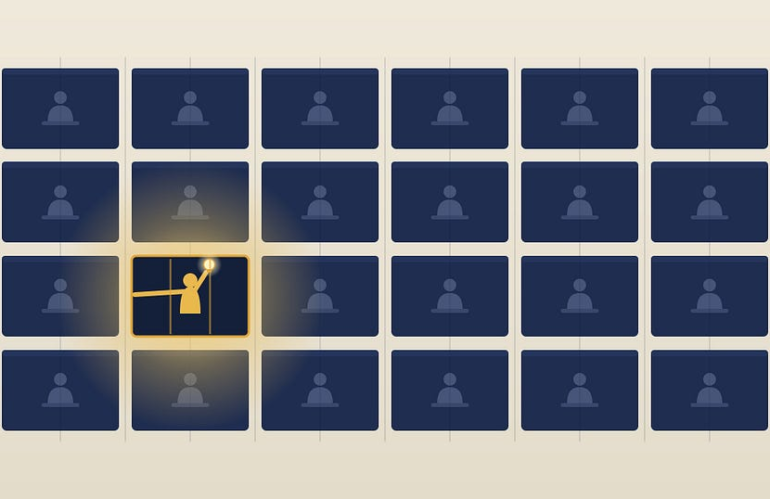
Every company already has this person. The only question is whether it will let them out of the box. We are all using the same tools. Companies that win will be the ones willing to trust the people who already understand them. Here’s a number more people should be talking about: Ninety-five percent of corporate AI …
Month: July 2026
The screens are getting demoted
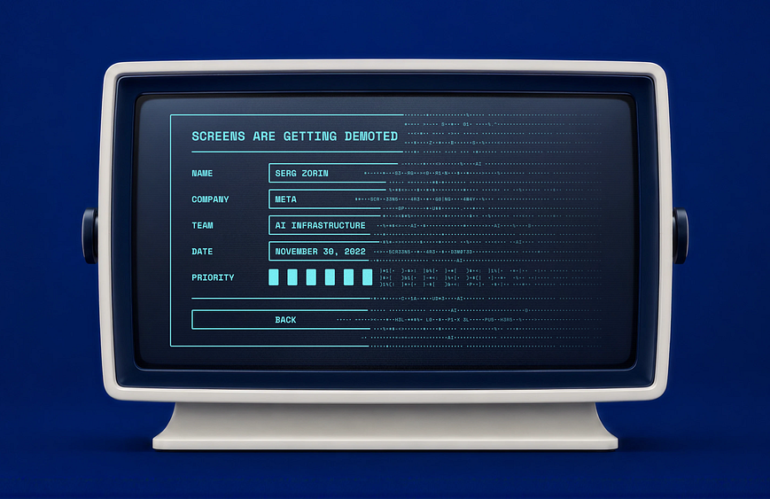
As AI products become more advanced, the interface is no longer the main focus. Now, the real question is which screens are still needed and which can serve as fallbacks. Illustration created by author Designers often say that UX isn’t really about screens. It’s a line I see in portfolios, I hear in interviews; that’s the …
AI systems are demanding new interaction models. Are designers ready?
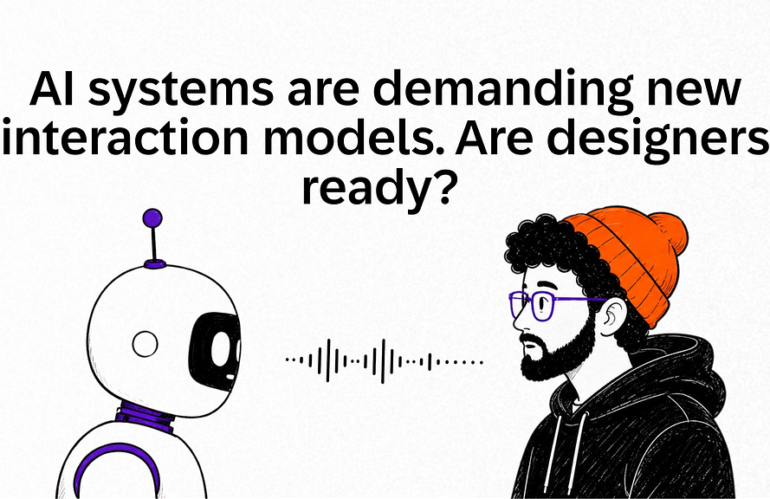
The first big shift in how we use software in years is underway. For decades, most software interactions have worked the same way. You open applications, close them, drag files into folders, click through menus, move between windows… That’s the desktop metaphor, software designed to feel like a physical workspace. Mobile touch and the web brought …
The revolution was the easy part

The announcement is one loud night. The evolution, the slow build starts the morning after, is the whole job. I recently asked Spotify for a Fourth of July playlist. Specifically, a rock one. It came back with big drums and big choruses: “Born in the USA,” “Fortunate Son,” “For What It’s Worth,” “Rockin’ in the Free World.” …
How designers need to change for an AI-powered world

A recap of ideas from our panel discussion for a topic that’s on everyone’s mind Continue reading on UX Collective » An applied framework for designing AI interfaces that support appropriate reliance, user control, transparency, and responsible autonomy. Traditional interfaces are built around predictable behavior. A control has a defined function. A workflow has known …